Why LeStallion Journals for Fountain Pens Are a Writer's Best Companion
There is a particular feeling that comes with putting a fountain pen to paper. It is not just the act of writing. It is the way the nib glides, the way the ink pools and dries with a slight sheen, the way each letter feels deliberate. That experience, for those of us who chase it, depends on the paper as much as it depends on the pen. Too smooth and the ink skids. Too textured and the nib catches. And if the paper bleeds or feathers, the whole thing falls apart. That is why I started paying close attention to what I write in, and why I have come to appreciate what LeStallion journals for fountain pens bring to the table.
What Matters in a Fountain Pen Journal
When you spend time choosing a fountain pen, you develop certain expectations. You want the ink to stay where you put it. You want the lines to remain crisp, even when you lay down a wet stub nib. And you want the paper to hold up to both sides of the sheet without ghosting so severely that you cannot read the back. These are not small requests. They require a paper that is coated or treated to resist ink penetration, while still offering enough tooth to give the nib friction to work with.
Most notebooks you find in a stationery shop are made for ballpoint or gel pens. They work fine for quick notes, but they do not handle the flow of fountain pen ink well. The fibers soak up the liquid and spread, turning a fine line into a fuzzy one. Over time, that fuzzing ruins the legibility of your writing. It also makes ink shading and sheen almost impossible to see. For someone who enjoys the visual character of different inks, that is a real loss.
How LeStallion Journals Handle Ink
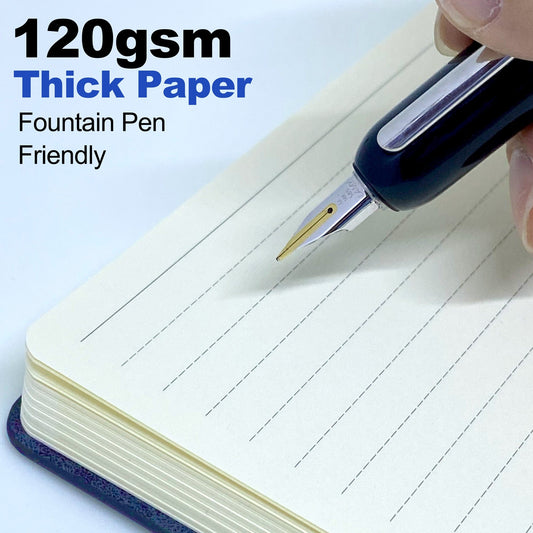
What sets LeStallion journals for fountain pens apart is the paper itself. It is not a generic off-the-shelf stock. The pages are chosen specifically to balance absorbency with resistance. The result is a surface that lets ink sit on top long enough to dry with its original color and character, but does not let it soak through to the next page. I have tested them with several wet inks, including a Diamine Oxblood and a Pilot Iroshizuku Kon-peki. On both, the lines came out sharp, the shading showed clearly, and there was no bleed-through on either side.
That matters more than you might think. When you are journaling, you are often writing on both sides of a page. If the paper ghosts too much, you end up fighting with the text from the previous page. It distracts you from the flow of thought. With a journal that handles ink properly, you can write freely without second-guessing where the nib goes next.

The Binding and Layout
Paper alone is not enough. A journal that opens flat, stays open, and does not shed pages over time is a journal you can trust. LeStallion journals use a sewn binding that lays flat on a desk. That is important for fountain pen users because you do not want to fight a stiff spine while trying to keep a consistent angle on your nib. The pages are also numbered, which is a small detail but helps when you want to find a specific entry later.
The layout options include ruled, dotted, and blank pages. For most writing, I prefer a subtle grid or dots to keep my lines straight without overwhelming the page with lines. The dots in these journals are light enough that they disappear under ink, but visible enough to guide your hand. That balance is harder to achieve than it sounds. Many dotted notebooks end up with dots so dark they compete with the writing. Here, the dots stay in the background where they belong.
Why LeStallion Journals for Fountain Pens Suit the Productive Writer
Productivity is not just about crossing tasks off a list. It is about creating a space where you can think clearly and capture those thoughts without friction. When your tools fight you, your mind wanders. When they work with you, you stay in the zone. That is the philosophy behind a journal that actually inspires your productivity. It is not about gimmicks or fancy covers. It is about removing every obstacle between you and the page.
Fountain pens already slow you down in a good way. They encourage deliberate strokes and thoughtful pacing. Pair that with paper that does not punish you for using a wet nib, and you have a combination that rewards focus. I have found that when I sit down with a LeStallion journal and a fountain pen, I write longer and with more clarity than when I use a random notebook. The quality of the paper makes me want to fill it, not just use it up.
Practical Details That Matter
- Page count: Around 200 pages, which gives you plenty of room without making the journal too thick to carry.
- Paper weight: 100 gsm, which is heavy enough to resist bleeding but still flexible enough to turn easily.
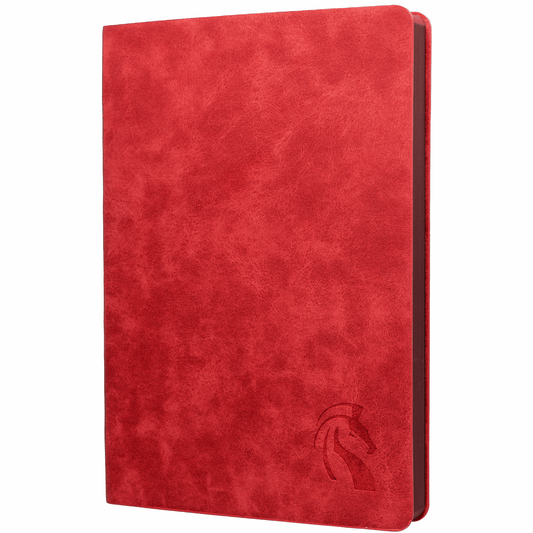
- Cover material: A soft, durable leatherette that bends without cracking and protects the pages.
These are not flashy specs. They are the kind of details you only notice after you have used the journal for a month. And that is the point. A good journal should not demand attention. It should just work.
Comparing to Other Options
There are other fountain-pen-friendly notebooks on the market. Some use Tomoe River paper, which is beloved for its thinness and ability to show ink properties. But Tomoe River can ghost significantly, and the paper is so light that it feels fragile. Others use thicker, more absorbent paper that kills line crispness. LeStallion journals for fountain pens sit in a middle ground that I think is ideal for everyday use. The paper is thick enough to feel substantial, but not so thick that the journal becomes a brick. The coating gives you great ink performance without the page feeling plasticky.
One thing I appreciate is that the journals do not pretend to be something they are not. They are not designed for watercolor painting or heavy mixed media. They are designed for writing. And for writing with fountain pens in particular, they deliver a consistent, reliable experience. That focus is refreshing in a market full of notebooks that try to do everything and end up doing none of it well.
Final Thoughts on Using LeStallion Journals
If you are someone who cares about the tactile experience of writing, it is worth investing in a journal that matches your pen. The combination of a well-tuned fountain pen and the right paper can turn a mundane task like taking notes into something you actually look forward to. That might sound like a small thing, but over the course of a year, those small moments add up. They build a habit. They make you want to write more.
I have been using my LeStallion journal for about three months now. It has traveled with me in a bag, been used on a train, and sat open on a desk for hours. The binding is still tight, the cover shows no wear, and the pages still feel the same as the first day. That kind of durability is rare in a notebook that also handles fountain pen ink well. It is the kind of product that makes you wonder why you settled for less before.
At the end of the day, a journal is just paper and thread. But when it is done right, it becomes a space where your thoughts can take shape without distraction. That is what I have found here, and it is why I keep coming back to it.